
If Cybercrime Were a Country, It Would Rank Third in GDP in 2024
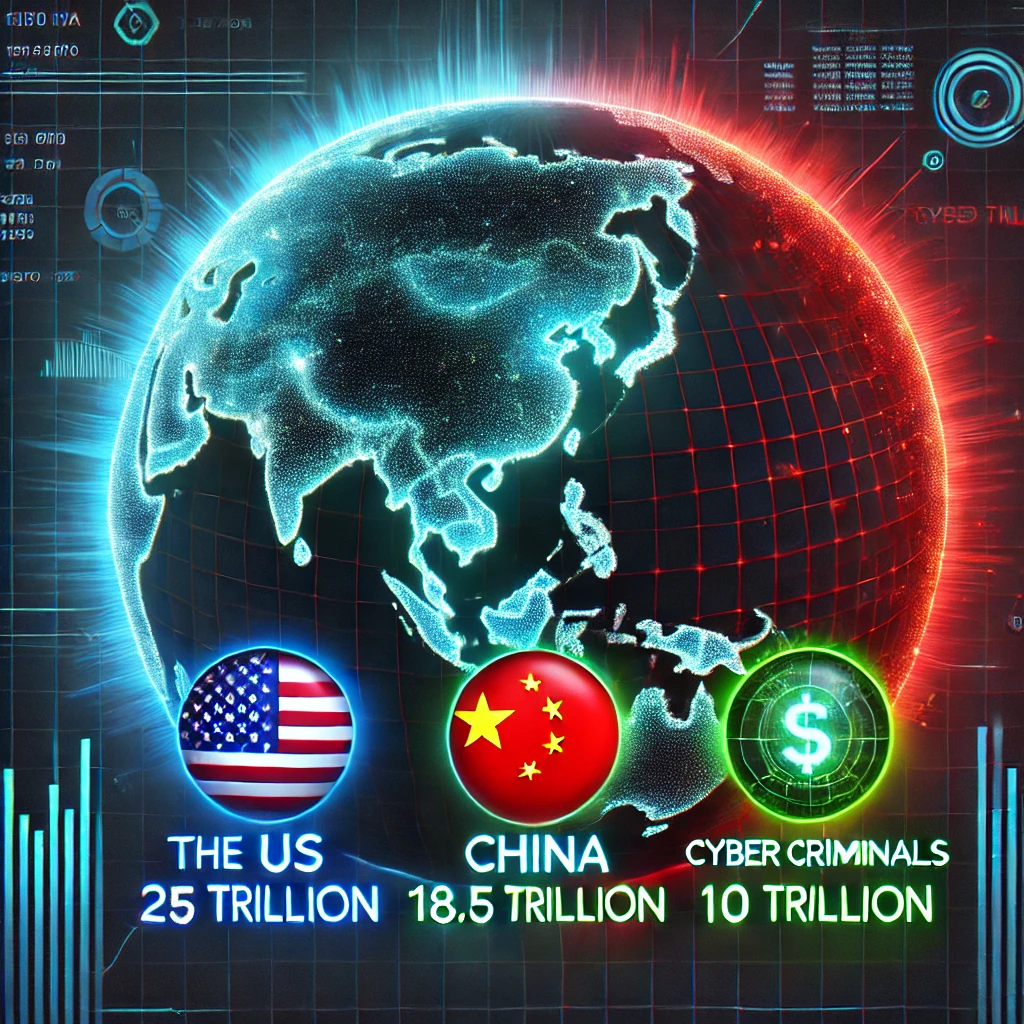 In 2024, the global economy saw a growth of 3.2% compared to the previous year, reaching approximately 105 trillion USD. At the same time, losses caused by cybercrime amounted to 10.5 trillion USD. If these losses were considered an economic entity, cybercrime would rank as the third largest economic force globally, following the United States and China. This alarming trend highlights the urgent need for timely and effective cybersecurity measures to limit both financial and social damage.
Impact on the Global Economy
Cybercrime encompasses a wide range of illegal activities – including data theft, financial fraud, ransomware attacks, and industrial espionage. In 2024, these crimes caused substantial losses to both large corporations and small and medium-sized enterprises (SMEs). Beyond direct financial damages, companies face costs related to system recovery, loss of reputation, and decreased productivity.Increasing distrust in the digital economy is also evident, as consumers become more cautious when sharing personal and financial data online. This negatively affects e-commerce and digital services. As a result, businesses are forced to invest substantial resources in cybersecurity – often exceeding their profits – which may lead to operational downsizing or even bankruptcy.
Critical infrastructure also faces serious risks, including power grids, transportation systems, and healthcare facilities. Attacks on hospitals can endanger human lives, while disruptions in power supply or transportation can paralyze entire cities. In 2023, attacks on the healthcare sector rose by 74%, with ransomware incidents causing hospital shutdowns and delays in medical procedures. Such breaches compromise security and inflict severe economic and social harm.
Financial losses from cyberattacks range from draining bank accounts to sophisticated cryptocurrency fraud. For organizations, such incidents can have catastrophic consequences, including operational shutdown, customer loss, and even bankruptcy. Statistics show that nearly 60% of SMEs close within six months of a major cyber incident, underscoring the critical need for cybersecurity investments and preventive measures.
Cyber incidents also result in a significant loss of customer trust, particularly when sensitive data is compromised. Affected companies often face long-term reputational damage and substantial financial losses. According to an IBM study, the average cost of a security breach in 2024 was 4.8 million USD per company, including expenses for system restoration, compensation for affected parties, and reputation management.
Prominent examples of cyberattacks include the incidents targeting UnitedHealth Group (2024), T-Mobile (2021), Colonial Pipeline (2021), and MOVEit (2023). These cases demonstrate the long-lasting effects of security breaches and the complexities involved in rebuilding trust. Recovery from such incidents is often a prolonged and complicated process, requiring significant investments in cybersecurity and transparent communication with affected stakeholders.
Ransomware: An Escalating Threat
Ransomware attacks remain one of the most severe cyber threats. In 2024, these attacks increased significantly, with cybercriminals employing tactics such as double extortion – encrypting victims' files while threatening to publish stolen data if the ransom is not paid. Such attacks not only cause financial harm but also erode trust in digital infrastructure.It is projected that ransomware damages will surpass 30 billion USD by 2025, prompting more organizations to implement "Zero Trust" principles and network segmentation to reduce penetration risks and limit attack proliferation.
 Social engineering and phishing attacks continue to be prevalent methods for system compromise and data theft. By exploiting psychological manipulation, cybercriminals deceive victims into divulging sensitive information such as usernames, passwords, or financial data. In 2024, phishing campaigns targeting corporate employees and critical infrastructure surged significantly.
Phishing attacks often involve mimicking official communications, creating fake websites, or sending messages from seemingly trusted sources. Consequences may include drained bank accounts, compromised corporate networks, or even ransomware infections. To counter these threats, organizations must invest in cybersecurity training for employees and adopt multi-layered protection measures such as multi-factor authentication and message filtering.
Expanding Attack Surface
As the use of the internet grows, the potential attack surface expands exponentially. By 2025, the global data volume is expected to exceed 200 zettabytes, creating unprecedented opportunities for cybercriminals. This trend emphasizes the need for enhanced cybersecurity practices, including stronger network protection, stringent access policies, and increased user awareness.The proliferation of connected devices, such as smart home appliances, autonomous vehicles, and industrial IoT systems, introduces new vulnerabilities. Cybercriminals can exploit security gaps in these devices to infiltrate corporate networks or critical infrastructure. The widespread adoption of 5G technology further complicates the situation by offering faster and more efficient communication, but it also opens new attack vectors against inadequately protected networks.
Strengthened Regulation
In response to the increasing number of cyberattacks, the European Union is introducing progressively stricter cybersecurity regulations:- Directive (EU) 2022/2555 on measures to achieve a high common level of cybersecurity (NIS2) - Adopted in 2022, applicable from October 2024. It expands the scope of cybersecurity obligations to more sectors and organizations. The main goal is to enhance the cyber resilience of critical infrastructures.
- Regulation (EU) 2022/2554 on digital operational resilience in the financial sector (DORA) - Applicable from January 2025. The primary goal is to ensure the operational resilience of financial institutions through cybersecurity measures and IT risk management.
- Regulation (EU) 2024/2847 on horizontal cybersecurity requirements for products with digital elements (Cyber Resilience Act) - Adopted in 2024, coming into force in 2025. This regulation introduces minimum cybersecurity requirements for connected devices and digital products, aiming to limit the access of vulnerable products to the European market. This is a key step towards reducing cyber risks associated with the Internet of Things (IoT) and industrial IoT systems.
- Regulation (EU) 2024/1689 establishing harmonized rules for artificial intelligence (AI Act) - Partially applicable from February 2025. It addresses risks associated with the implementation of artificial intelligence, including aspects of security and data protection. This will improve transparency and trust in AI systems, reducing potential cyber threats from automated technologies.
Investments in Cybersecurity
In response to escalating cyber threats, global spending on cybersecurity is significantly increasing. Forecasts predict that annual spending on cybersecurity services and solutions will rise by 46% to reach 271 billion USD over the next five years. However, the growth rate of these investments shows signs of slowing, potentially leaving many organizations vulnerable to emerging threats.Besides increased investments, many organizations are adopting artificial intelligence and machine learning to automate threat detection and response. These technologies enable real-time identification and neutralization of cyber risks, substantially reducing response time and damage. However, cybercriminals are also leveraging these technologies to enhance their attack strategies, creating a constantly evolving threat landscape.
To minimize risk and financial loss, collaboration between governments, businesses, and individual users is essential. Practical measures for improving cyber resilience include:
- Investing in advanced cybersecurity technologies, such as AI and automated monitoring systems.
- Training personnel to build a cyber-aware culture and reduce the risks of social engineering.
- Implementing "Zero Trust" principles to minimize penetration risks through strict access management and network segmentation.
- Developing robust incident response plans and regularly simulating potential threats.
Cybercrime has emerged as a global challenge comparable to the world’s largest economic powers. Even with substantial investments in cybersecurity, the threat landscape continues to evolve at an unprecedented pace, endangering businesses, critical infrastructure, and even human lives.
In this dynamic and uncertain environment, resilience and preparedness become key elements of corporate strategy. Organizations must adopt a proactive approach by implementing modern technologies, training employees, and strictly adhering to "Zero Trust" principles. Only by integrating modern solutions and fostering active collaboration between the private and public sectors can we confront the growing cyber threat.
To remain competitive and secure in the future, organizations must not only adapt to changing conditions but also strategically plan their cybersecurity investments. In the digital age, trust is not a given – it must be vigilantly safeguarded and continuously reinforced.
Implementation of management standards
CONSEJO Ltd. is a consulting company with over 20 years of practical experience in the development, implementation and maintenance of management systems in accordance with international standards and regulatory requirements. The company provides consulting services in the areas of quality management, environmental management, occupational health and safety, food safety, information security, cybersecurity, risk management and sustainable development. Our expertise covers standards and schemes such as ISO 9001, ISO 14001, ISO 45001, ISO 22000, ISO/IEC 27001, IFS Food, BRCGS and HACCP, as well as consulting services related to NIS2, DORA, GDPR and EcoVadis.
The CONSEJO team has been involved in over 1,500 projects for organizations across various sectors of the economy, including manufacturing, construction, energy, information technology, transport, trade, the food industry and services. Our approach focuses on developing management systems that work effectively in practice, tailored to the specific characteristics and needs of each organization. We work closely with our clients, providing consulting support, staff training and assistance during implementation. We strive to deliver high-quality services within the agreed deadlines and solutions that support successful certification and create long-term value for businesses.


