
FSSC 22000 Releases Version 7
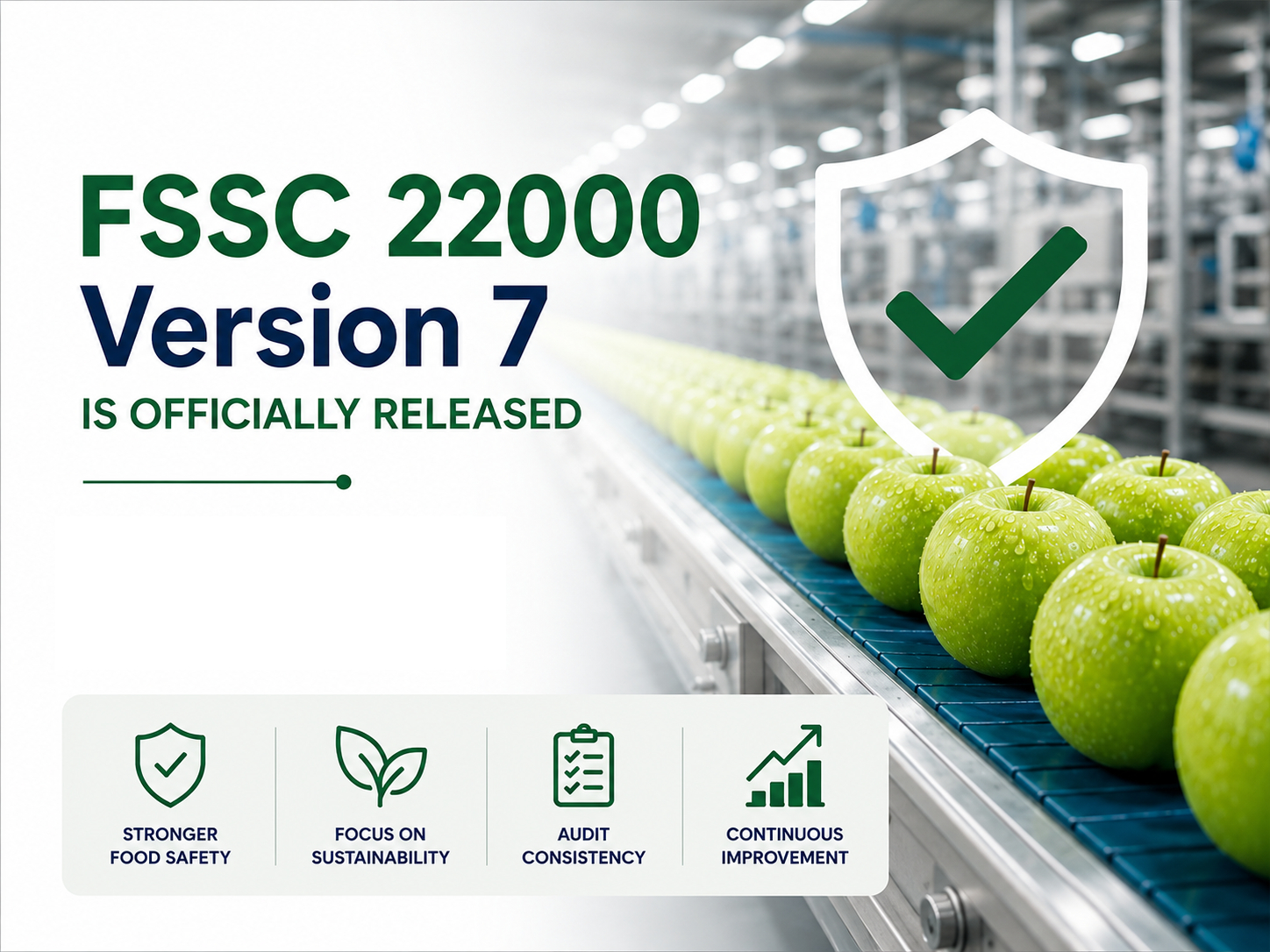 FSSC 22000 released Version 7 of its food safety management system certification scheme on May 1, 2026. The new edition reflects recent updates to international standards, GFSI requirements, and the increasing focus on sustainability, audit consistency, and risk management in the context of emerging technologies.
Version 7 builds on the existing scheme framework and introduces changes related to prerequisite programmes (PRPs), Food Chain Categories, auditor competence, and the use of AI technologies in the certification process.
KEY CHANGES IN VERSION 7
New ISO 22002-x Series
One of the main changes introduced in Version 7 is the incorporation of the new ISO 22002-x:2025 series for prerequisite programmes (PRPs). Within this framework, ISO 22002-100:2025 defines the common requirements for PRPs, complemented by sector-specific standards such as ISO 22002-1 for food manufacturing.
The new approach aims to improve harmonisation across different sectors of the food chain, better support organisations with combined activities, and reduce duplication of requirements between individual PRP standards.
Updated Food Chain Categories
Version 7 also introduces changes to the Food Chain Categories used for defining certification scope and determining auditor competence requirements.
The objective is to achieve more precise differentiation between activities within the food chain and better alignment between risk, sector specificity, and audit approach. This affects organisations operating in areas such as:
- food manufacturing;
- packaging manufacturing;
- logistics and storage;
- trading and brokerage activities;
- feed and raw material production.
Alignment with Current GFSI Requirements
Version 7 has been developed in alignment with the GFSI Benchmarking Requirements 2024. This is particularly important for organisations working with international customers and supply chains requiring GFSI-recognised certification.
The update aims to improve audit consistency and strengthen confidence in the certification process.
Stronger Focus on Sustainability
The new version places greater emphasis on sustainability and the reduction of food loss and waste (FLW).
Topics related to sustainable packaging design, waste reduction, and support for the United Nations Sustainable Development Goals (SDGs) are increasingly considered part of effective risk management and sustainability within the food industry.
Some of these elements are included as specific requirements, while others are addressed as good practices and guidance for organisations.
Continuous Improvement and Food Safety Culture
Version 7 places stronger emphasis on the continuous improvement of management systems and the development of a food safety culture within organisations.
Organisations are expected to demonstrate not only formal compliance with the standard, but also the active involvement of management and personnel in risk management processes, good manufacturing practices, and preventive practices.
Updated Requirements for Auditors
Version 7 also introduces changes regarding auditor qualification and competence.
Greater importance is placed on:
- understanding manufacturing processes;
- knowledge of legal and regulatory requirements;
- technical expertise within the relevant sector;
- practical application of good manufacturing practices.
Use of Artificial Intelligence and Digital Technologies
Version 7 introduces requirements related to the use of Artificial Intelligence (AI) in the certification process by Certification Bodies. These cover AI governance, risk assessment, transparency, security, and maintaining human judgement in decision-making.
FSSC emphasises that AI may be used as a supporting tool but cannot replace human expertise or key certification decisions.
Benefits for Organisations
The changes introduced in Version 7 are intended to support:
- improved harmonisation across sectors;
- clearer and more structured requirements;
- better integration of sustainable practices;
- improved audit consistency;
- enhanced risk management.
What Certified Organisations Should Do
To ensure a successful transition to Version 7, organisations are advised to begin preparations before the transition audit. Practical steps may include:
- reviewing existing PRPs;
- conducting a gap analysis between Version 6 and Version 7;
- updating internal documentation and procedures;
- assessing practices related to sustainability and waste management;
 reviewing the competence and training of internal auditors;
- evaluating the use of digital tools and AI solutions, where applicable;
- planning the transition audit within the defined transition period.
Transition Timeline for Version 7
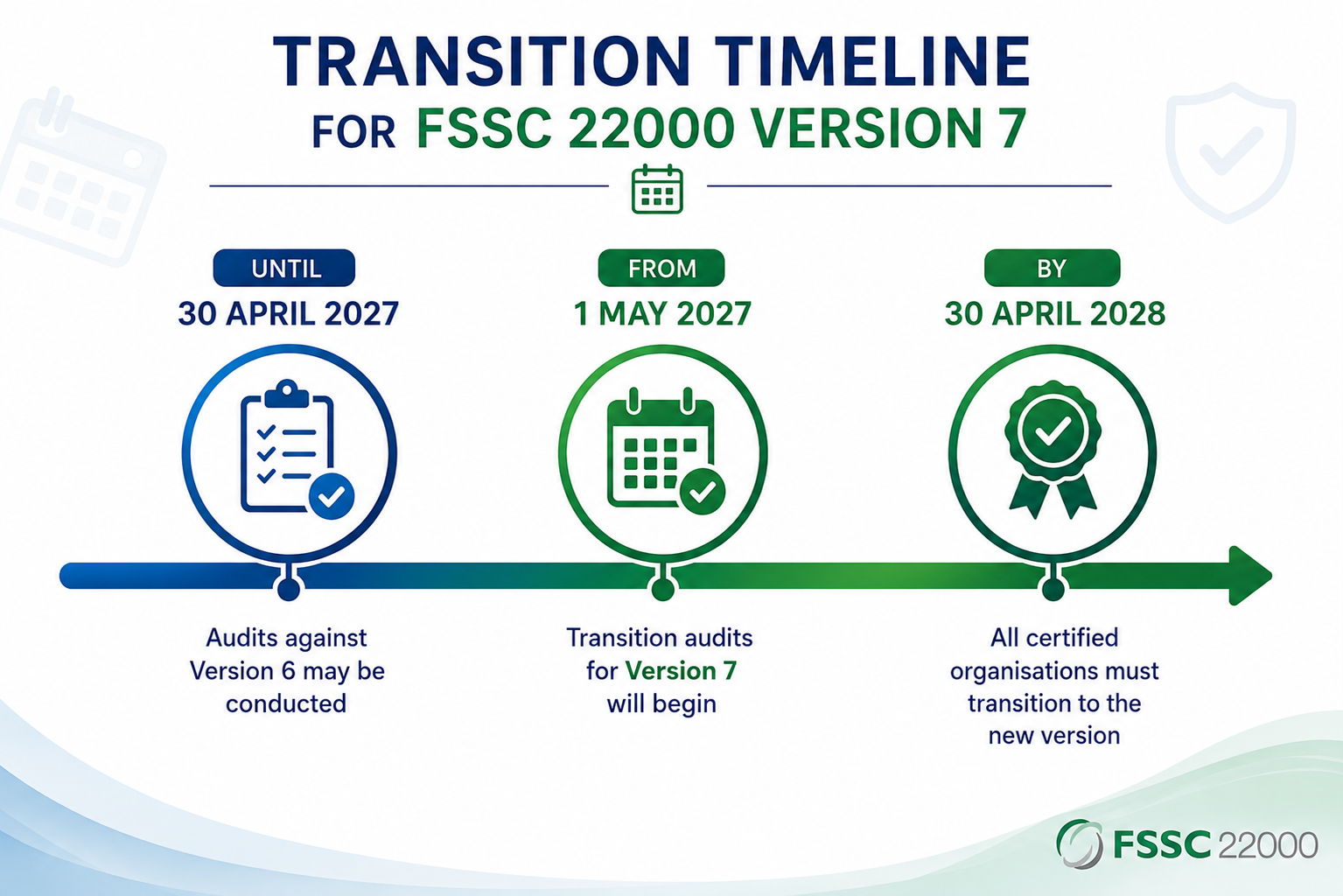
FSSC 22000 has established a 12-month transition period:
- audits against Version 6 may be conducted until April 30, 2027;
- transition audits for Version 7 will begin on May 1, 2027;
- all certified organisations must transition to the new version by April 30, 2028.
FSSC 22000 Version 7 places stronger emphasis on audit consistency, sustainability, and risk management amid increasing digitalisation within the food industry.
The new version aims to create a more harmonised and practical model for food safety management across different sectors of the industry.
For organisations, this means the need for timely preparation, review of existing PRPs, and assessment of readiness for the new requirements.
Implementation of management standards
CONSEJO Ltd. is a consulting company with over 20 years of practical experience in the development, implementation and maintenance of management systems in accordance with international standards and regulatory requirements. The company provides consulting services in the areas of quality management, environmental management, occupational health and safety, food safety, information security, cybersecurity, risk management and sustainable development. Our expertise covers standards and schemes such as ISO 9001, ISO 14001, ISO 45001, ISO 22000, ISO/IEC 27001, IFS Food, BRCGS and HACCP, as well as consulting services related to NIS2, DORA, GDPR and EcoVadis.
The CONSEJO team has been involved in over 1,500 projects for organizations across various sectors of the economy, including manufacturing, construction, energy, information technology, transport, trade, the food industry and services. Our approach focuses on developing management systems that work effectively in practice, tailored to the specific characteristics and needs of each organization. We work closely with our clients, providing consulting support, staff training and assistance during implementation. We strive to deliver high-quality services within the agreed deadlines and solutions that support successful certification and create long-term value for businesses.


