
Artificial Intelligence and Sustainable Tourism: How Technology Is Transforming the Management and Quality of Tourism Services
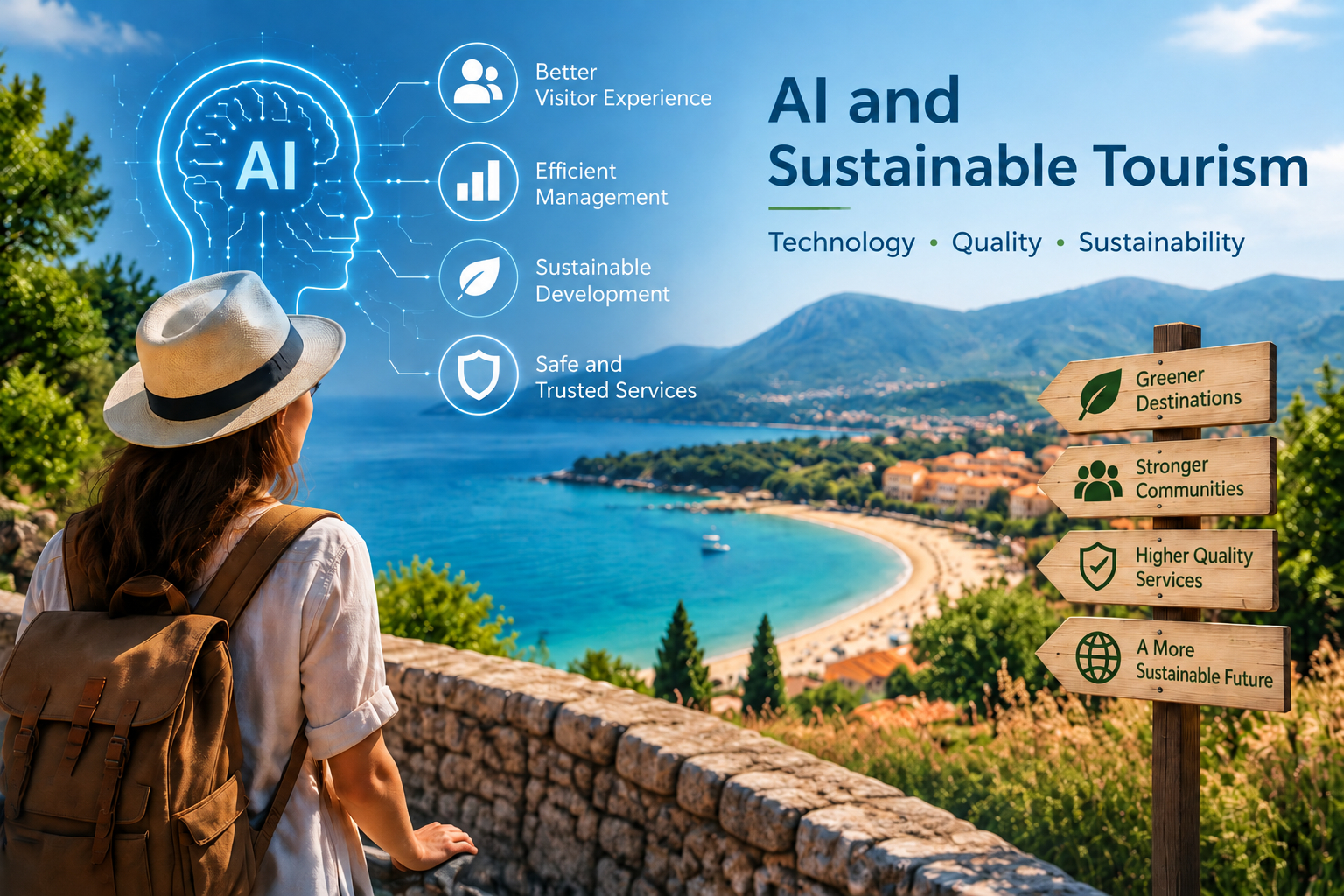 Tourism is one of the sectors in which digital technologies are transforming both the way services are delivered and customer expectations. Online bookings, digital platforms, automated services, data analytics and artificial intelligence solutions are increasingly helping tourism organizations improve the customer experience, planning and resource utilization, while at the same time creating new requirements for quality, sustainable management and information protection.
This transformation is also at the heart of World Tourism Day 2026, celebrated on 27 September. This year’s theme draws attention to digital technologies and artificial intelligence and their role in the development of the tourism sector.
The use of artificial intelligence (AI), automated systems and the analysis of large volumes of data can help tourism organizations improve the customer experience, optimize processes and resources, and identify new opportunities for development.
Digital transformation, however, goes beyond the implementation of technology. To ensure that technologies are used effectively and responsibly, a systematic management approach is needed, encompassing quality, sustainability, information security and risk management.
Artificial Intelligence as a Driver of Change in the Tourism Sector
Artificial intelligence is becoming an important tool for tourism organizations, supporting both operational activities and strategic planning.
In the tourism sector, artificial intelligence can be used to:
- analyse visitor preferences and behaviour;
- create more personalized tourism services;
- automate customer communication through intelligent assistants;
- forecast tourist flows and visitor numbers and capacity at tourism sites;
- optimize resource utilization;
- support management decision-making through the analysis of available data.
At the same time, the use of artificial intelligence creates new requirements for organizations related to data quality, process transparency, information protection and risk management.
Digital Transformation Requires Risk Management
The digitalization of the tourism sector is leading to growing volumes of processed information and increasing dependence on digital systems. Tourism organizations process significant amounts of data, including reservation information, customer information, payment data and customer preferences.
This makes information security an essential element of the sustainable management of tourism services.
Organizations need to establish appropriate mechanisms for:
- protecting the confidentiality, integrity and availability of information;
- managing risks associated with digital technologies;
- controlling access to information;
- ensuring the reliability of the systems used;
- complying with applicable regulatory requirements.
When implementing artificial intelligence solutions, organizations also need to manage additional aspects related to reliability, transparency and the responsible use of AI.
ISO/IEC 42001 – Artificial Intelligence Management System provides an international framework for establishing, implementing, maintaining and continually improving an artificial intelligence management system, including the management of risks and transparency towards customers and regulators associated with the use of AI.
Quality of Tourism Services in a Digital Environment
Technology can significantly enhance the tourism experience, but service quality depends on how processes are organized and managed as a whole.
For tourism organizations, this includes:
- understanding customer expectations;
- managing service delivery processes;
- monitoring and analysing feedback;
- managing nonconformities;
- continual improvement.
In the tourism sector, ISO 9001 can support organizations in managing the customer experience, standardizing processes and ensuring consistent service quality.
The use of digital tools and AI solutions can complement this approach by enabling better data analysis, identifying trends and supporting decisions aimed at improvement.
Sustainable Tourism and Efficient Resource Management
Modern tourism faces the challenge of combining economic development with the protection and responsible use of natural resources.
Sustainable management of tourism services includes:
- efficient use of natural resources;
- reducing negative environmental impacts;
- waste management;
- improving energy efficiency;
- creating value for visitors and local communities.
Combined with digital technologies, AI can support the analysis of resource consumption, process optimization and the planning of more sustainable tourism services.
Managing Tourism Services through Standardized Approaches
In the tourism sector, different aspects of management – quality, sustainability, security and the use of new technologies – are interconnected.
ISO 13009:2015 “Tourism and related services — Requirements and recommendations for beach operation” provides a framework for managing beach operations and related services. The standard addresses aspects such as safety, accessibility, visitor information, infrastructure management and service quality improvement.
The implementation of standardized approaches enables tourism organizations to structure their processes and manage more effectively the factors that influence customer satisfaction and sustainable development.
The Role of Management Systems in the Future of Tourism
The digital transformation of the tourism sector requires a comprehensive management approach that defines processes, responsibilities, risks and mechanisms for improvement.
Combining:
- ISO 9001 for quality management;
- ISO 14001 for environmental management;
- ISO/IEC 27001 for information security;
- ISO/IEC 42001 for artificial intelligence management;
- ISO 13009:2015 for beach operation management;
Artificial intelligence and sustainable tourism are interconnected areas in the development of modern tourism services. Technology creates new opportunities to improve quality, manage resources more efficiently and better understand customer needs.
The sustainable use of new technologies depends on an organization’s ability to integrate them into a clear management framework encompassing quality, security, sustainability and risk management.
Organizations that combine innovation with a structured management approach will be better prepared to respond to changing tourist expectations and the future challenges facing the tourism sector.
Implementation of management standards
CONSEJO Ltd. is a consulting company with over 20 years of practical experience in the development, implementation and maintenance of management systems in accordance with international standards and regulatory requirements. The company provides consulting services in the areas of quality management, environmental management, occupational health and safety, food safety, information security, cybersecurity, risk management and sustainable development. Our expertise covers standards and schemes such as ISO 9001, ISO 14001, ISO 45001, ISO 22000, ISO/IEC 27001, IFS Food, BRCGS and HACCP, as well as consulting services related to NIS2, DORA, GDPR and EcoVadis.
The CONSEJO team has been involved in over 1,500 projects for organizations across various sectors of the economy, including manufacturing, construction, energy, information technology, transport, trade, the food industry and services. Our approach focuses on developing management systems that work effectively in practice, tailored to the specific characteristics and needs of each organization. We work closely with our clients, providing consulting support, staff training and assistance during implementation. We strive to deliver high-quality services within the agreed deadlines and solutions that support successful certification and create long-term value for businesses.


