
AI and Energy: Europe’s New Strategic Challenge
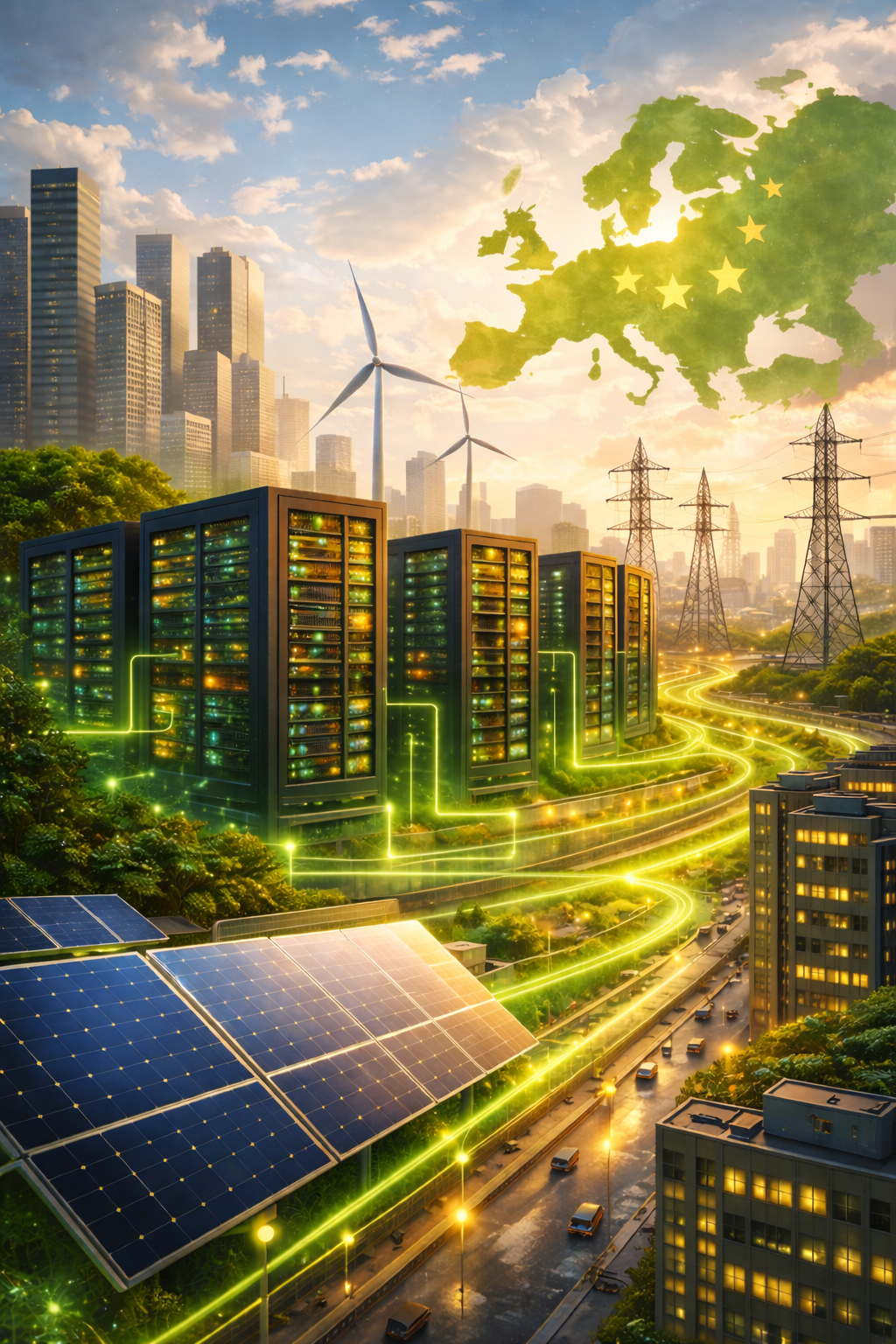 Artificial intelligence (AI) is increasingly recognised as a key driver of economic growth, digital transformation, and innovation in Europe and worldwide. Alongside its undeniable benefits, however, the rapid development and large-scale deployment of AI are posing ever more serious challenges to energy systems.
Rising electricity consumption, growing strain on power grids, and the need for sustainable energy solutions are no longer hypothetical scenarios, but real issues on the strategic agenda—both at European and national level.
Artificial Intelligence and Growing Energy Consumption
Modern AI models—especially generative AI and large-scale machine learning models—require substantial computational resources and the continuous operation of high-performance infrastructure.
- According to the International Energy Agency (IEA), data centres, cloud services, and AI accounted for around 1.5% of global electricity consumption in 2024.
- Global electricity consumption of data centres is expected to double by 2030, with AI as the main driver of this growth.
- In Europe, data centres consume approximately 90–100 TWh of electricity annually, with projections indicating 150–200 TWh by 2030 under an accelerated AI adoption scenario.
- A single large data centre can have an installed capacity of between 50 and 100 MW—comparable to the electricity consumption of a medium-sized city.
Impact on Europe’s Energy Systems
The growth of AI is accelerating several key processes in European energy systems:
- increased load on transmission and distribution networks, particularly in regions with a high concentration of data centres;
- the need for investment in new generation capacity, including renewable energy sources;
- development of smart grids and real-time load management systems;
- stronger focus on energy efficiency and sustainability in line with the objectives of the European Green Deal.
What This Means for Bulgaria
For Bulgaria, the impact of AI growth is currently more limited in absolute terms, but the trend is clear and cannot be ignored:
- The country’s total annual electricity consumption is around 35–38 TWh.
- Even a few large data centres with capacities of 30–50 MW could add 0.5–1 TWh of additional annual consumption, which already represents a significant share at national level.
- Bulgaria has a relatively balanced energy mix—nuclear energy provides a stable baseload, while installed renewable capacities (solar and wind) have been growing rapidly in recent years.
- modernisation of the transmission and distribution grid;
- energy storage systems;
- intelligent load management;
- a clear and predictable regulatory framework for energy-intensive digital activities.
AI as Part of the Solution
Paradoxically, AI itself can be part of the solution to the energy challenges it creates. Key benefits include:
- 10–15% more accurate energy demand forecasts through machine learning models;
- optimisation of power grids and reduction of technical losses;
- more efficient integration of renewable energy sources through forecasting of solar and wind generation;
- lower maintenance costs through diagnostics and early fault detection.
The growth of artificial intelligence is inevitably transforming energy systems in Europe, including in Bulgaria. The data clearly show that pressure on electricity consumption and power grids will increase, but at the same time significant opportunities for sustainable development are emerging.
For organisations, this means that AI is no longer merely an IT or innovation topic, but a strategic issue directly linked to energy, sustainability, ESG, NIS2, DORA, and the future regulation of AI.
The growth of AI is not just a technological challenge—it is a key factor shaping the future of energy, the economy, and Europe’s competitiveness.
Implementation of management standards
CONSEJO Ltd. is a consulting company with over 20 years of practical experience in the development, implementation and maintenance of management systems in accordance with international standards and regulatory requirements. The company provides consulting services in the areas of quality management, environmental management, occupational health and safety, food safety, information security, cybersecurity, risk management and sustainable development. Our expertise covers standards and schemes such as ISO 9001, ISO 14001, ISO 45001, ISO 22000, ISO/IEC 27001, IFS Food, BRCGS and HACCP, as well as consulting services related to NIS2, DORA, GDPR and EcoVadis.
The CONSEJO team has been involved in over 1,500 projects for organizations across various sectors of the economy, including manufacturing, construction, energy, information technology, transport, trade, the food industry and services. Our approach focuses on developing management systems that work effectively in practice, tailored to the specific characteristics and needs of each organization. We work closely with our clients, providing consulting support, staff training and assistance during implementation. We strive to deliver high-quality services within the agreed deadlines and solutions that support successful certification and create long-term value for businesses.


